This glossary serves to understand some of the basic concepts of heat transfer, which were rescued from a summary reading on the subject. it's important to understand these concepts to begin to become familiar with this field of study, mainly the three basic mechanisms of heat transfer: conduction, convection and radiation, as well as many others which are defined below.
Closed system
Noun.
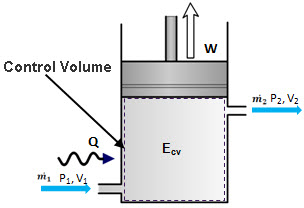
A closed system is defined when a particular quantity of matter is under study. A closed system always contains the same matter. There can be no mass transfers across the boundary. There may be energy transfer across the boundary.
Example: A thermometer is a CLOSED SYSTEM since it is hermetically closed, the content of a thermometer never varies, but it does react according to the temperature it perceives, that is, it is sensitive to the input of heat (energy).
es: Sistema cerrado.
Conduction
Noun.
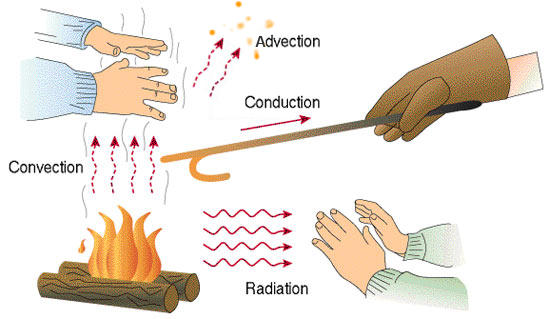
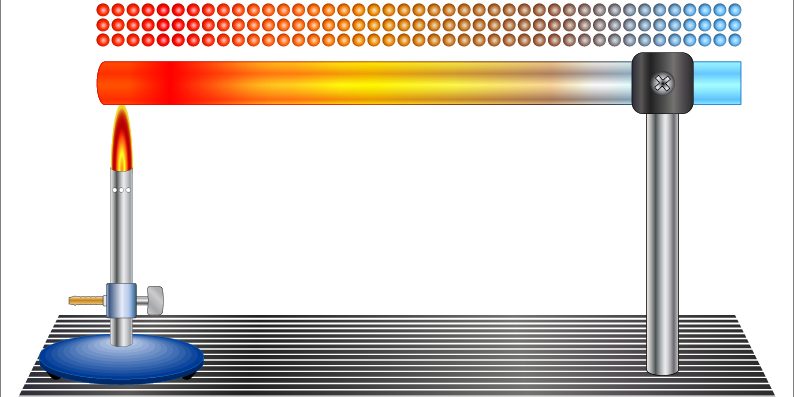
Conduction is the transfer of energy from the more energetic particles of a substance to the adjacent less energetic ones as a result of interactions between the particles. Conduction can take place in solids, liquids, or gases.
Example: Ice in a cup of hot water melts through CONDUCTION.
es: Conducción.
Consist of
Phrasal verb.
To be made of or formed from something.
Example: The velocities and mass flow rates of species in a moving medium CONSIST OF two components: one due to molecular diffusion and one due to convection.
es: Consiste en.
Convection
Noun.
Convection is the mode of energy transfer between a solid surface and the adjacent liquid or gas that is in motion, and it involves the combined effects of conduction and fluid motion. The faster the fluid motion, the greater the convection heat transfer.
Example: The hand dryer or hair dryer, which transmit heat by forced convection.
es: Convección.
Deal with
Phrasal verb.
To be about (something) : to have (something) as a subject.
Example: The commission will DEAL WITH this issue next week.
es: Tratar de.
Emissivity
Noun.
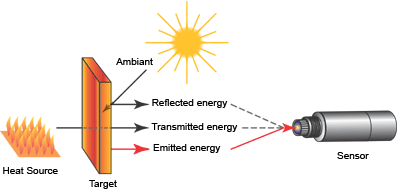
The relative power of a surface to emit heat by radiation : the ratio of the radiant energy emitted by a surface to that emitted by a blackbody at the same temperature.
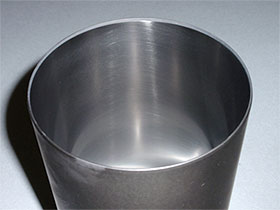
Example: EMISSIVITY can have a value between 0 (bright mirror) and 1.0 (black body).
es: Emisividad.
Fixed mass
Noun.
As its name indicates, a fixed mass refers to the fact that said quantity of matter remains constant in a certain process. A closed system consists of a fixed mass.
Example: A bottle of cold water exposed to room temperature remains a FIXED MASS since the bottle is closed, the transfer of matter between the system and the environment is impossible.
es: Masa fija.
Heat Transfer
Noun.
Heat transfer describes the flow of heat (thermal energy) due to temperature differences and the subsequent temperature distribution and changes. It's also said to be the science that deals with determining the rates for that energy transfer.
Example: On the surface deposits of materials can accumulate that reduce the HEAT TRANSFER and increase the pressure drop.
es: Transferencia de calor.
Inner surface
Noun.
A surface is an extension in which two dimensions are taken into consideration, the bodies have two or more surfaces, the interior is the one that is closest to the reference point.
Example: The INNER SURFACE of the bottom of the pan is maintained at 110°C.
es: Superficie interna.
Internal energy
Noun.
It's the sum of all the microscopic forms of energy, knowing that the microscopic energy are the forms of energy related to the molecular structure of a system and to the degree of molecular activity.
Example: Water vapor has INTERNAL ENERGY as it is linked to the random movement of particles within a system.
es: Energía interna.
Kinetic energy
Noun.
Form of energy that an object or a particle has by reason of its motion.
Example: By throwing a ball through the air, he acquires a KINETIC ENERGY that, when another player cuts it off, he must compensate with a work of equal magnitude.
es: Energía cinética.
Mass transfer
Noun.
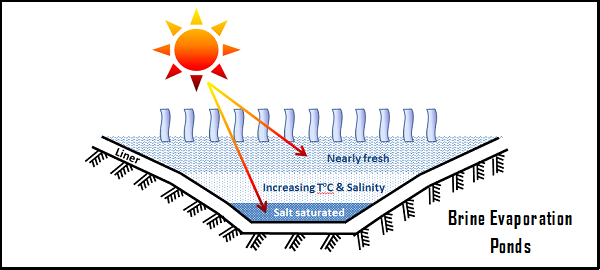
Mass transfer requires the presence of two regions at different chemical compositions, and mass transfer refers to the movement of
a chemical species from a high concentration region toward a lower concentration one relative to the other chemical species present in the medium.
Example: In the evaporation of water from a pond to the atmosphere, a MASS TRANSFER takes place.
es: Transferencia de masa.
Newton's law of cooling
Noun.
A statement in physics: the rate at which an exposed body changes temperature through radiation is approximately proportional to the difference between its temperature and that of its surroundings.
Example: At present, NEWTON'S LAW OF COOLING is used especially in climate models.
es: Ley de enfriamiento de Newton.
Open system
Noun.
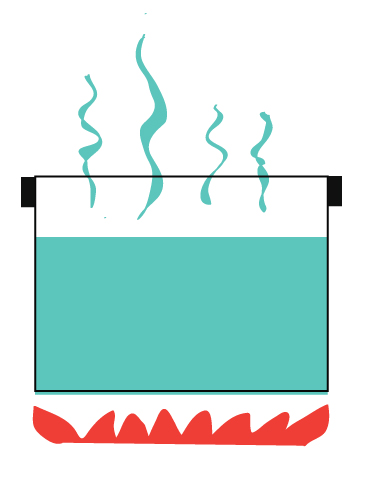
An open system is one that freely allows both energy and matter to be transferred in an out of a system.
Example: A pot of boiling water is an OPEN SYSTEM since the energy introduced into the system by the fire transforms the water into gas, which is released into the environment.
es: Sistema abierto.
Outer surface
Noun.
It's an extension with two dimensions whose main characteristic is that it's far from the center or reference point, the distance between the inner and outer surface is the thickness.
Example: If the OUTER SURFACE temperature of the pipe is 70°C.
es: Superficie exterior.
Photons
Plural noun.
A particle representing a quantum of light or other electromagnetic radiation. A photon carries energy proportional to the radiation frequency but has zero rest mass.
Example: PHOTONS are emitted in many natural processes, for example, when an electrically charged particle is decelerated.
es: Fotones.
Potential energy
Noun.
Potential energy is the energy held by an object because of its position relative to other objects, stresses within itself, its electric charge, or other factors.
Example: The roller coaster's mobile gets its POTENTIAL ENERGY as it climbs to the top.
es: Energía potencial.
Radiation
Noun.
Is the energy emitted by matter in the form of electromagnetic waves (or photons) as a result of the changes in the electronic configurations of the atoms or molecules.
Example: The filament of incandescent bulbs reaches high temperatures, between 1200 and 2500 ºC, emitting energy distributed in infrared RADIATION (most of it) and visible light, orange or yellow in color.
es: Radiación.
Stationary state
Noun.
The steady state of an open system that is in equilibrium is defined as one in which the state variables (temperature, volume, pressure, etc.) do not vary.
Example: The STATIONARY STATE is one in which there are no changes in process variables. For example, in a heat exchanger, water can enter at 25 ° C and exit at 80 ° C.
es: Estado estacionario.
Temperature gradient
Noun.
The rate of change of temperature with displacement in a given direction (as with increase of height).
Example: The small thickness of the wall causes the TEMPERATURE GRADIENT in that direction to be large.
es: Gradiente de temperatura.
Thermal conductivity
Noun.
Thermal conductivity can be defined as the rate at which heat is transferred by conduction through a unit cross-section area of a material, when a temperature gradient exits perpendicular to the area.
Example: The THERMAL CONDUCTIVITY of the soil is given to be k = 0.9 W/m · °C.
es: Conductividad térmica.
Thermal energy
Noun.
Thermal energy refers to the energy contained within a system that is responsible for its temperature. Heat is the flow of thermal energy.
Example: The largest source of THERMAL ENERGY available to us is the sun.
es: Energía térmica.
Thermodynamics
Noun.
Thermodynamics is a branch of physics that deals with heat, work, and temperature, and their relation to energy, radiation, and physical properties of matter.
Example: The first law of THERMODYNAMICS It is also known as the "Law of Conservation of Energy".
es: Termodinámica.
Total energy
Noun.
It's the sum of all the numerous forms of energy, such as thermal, mechanical, kinetic, potential, electrical, magnetic, chemical, and nuclear. The total energy is denoted by the capital letter "E" (or lowercase "e" in terms of unit of mass).
Example: In practice, in non-relativistic situations, one tends, in a first approximation (usually very good), to decompose the TOTAL ENERGY into a sum of terms that are called the different forms of energy.
es: Energía total.
Undergo
Verb.
Experience or be subjected to (something, typically something unpleasant, painful, or arduous).
Example: Therefore, water can UNDERGO a liquid-to-vapor or vapor-to-liquid.